USA vs England: A Rivalry Beyond the Pitch
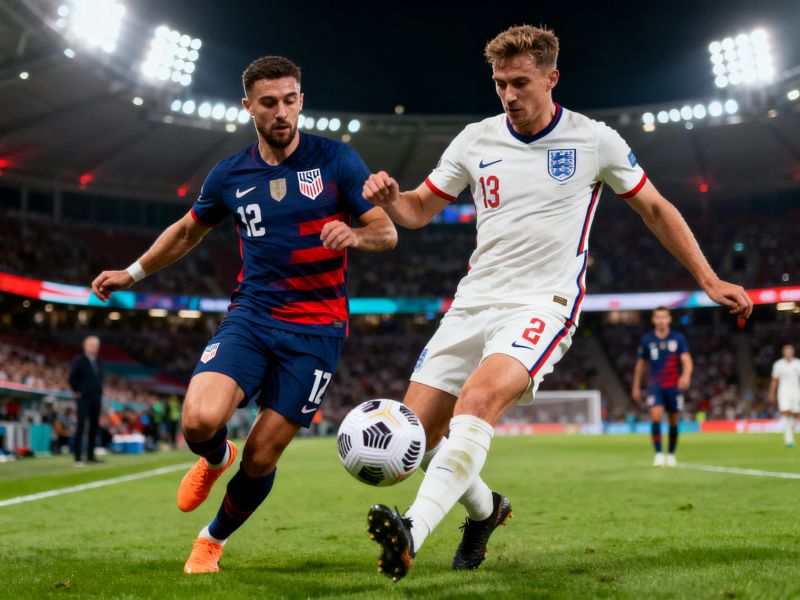
he 1950 World Cup match in Belo Horizonte remains the sharpest upset in the history of USA vs England encounters. A part-time team of schoolteachers, mailmen, and a Haitian-born dishwasher beat a star-studded England side 1-0. I’ve rewatched the grainy footage more than once—the shock on England’s faces, the disbelief in the Brazilian crowd. That result still defines the rivalry’s early narrative: England as the arrogant powerhouse, the USA as the plucky underdog. But the USA vs England dynamic has never been just about soccer. It’s about two nations that share a language but little else on the field。and whose meetings carry an edge of cultural one-upmanship.On the pitch, the tactical contrast is striking. England typically builds from a structured backline, relying on possession and patient buildup through midfield triangles. The USA。especially in competitive matches, presses high and leverages athletic transitions—witness the 1-1 draw at the 2010 World Cup, where Clint Dempsey’s equalizer came from a quick counter. That game, which I watched in a packed Boston bar, felt like a microcosm of the rivalry: England controlled the ball, the USA controlled the moments that mattered. The USA vs England fixture often follows this script—England’s technical superiority versus American grit and speed. It’s not always pretty, but it’s rarely dull.
The women’s game flips the power dynamic entirely. The USWNT has dominated the USA vs England series, including a 2-1 win in the 2019 World Cup semifinal that many consider the real final. England’s Lionesses have improved dramatically since, winning Euro 2022。but they still trail the USA in head-to-head World Cup meetings. That semifinal in Lyon was a masterclass in American ruthlessness—Christen Press scoring early, Alex Morgan’s cheeky tea-sipping celebration. It stung English fans, and the rivalry has only intensified. When the two meet now, it feels less like an underdog story and more like a clash of equals, with the USA holding a psychological edge.Off the field, the USA vs England rivalry mirrors broader sporting tensions. English fans often mock American soccer’s “soccer” pronunciation and its playoff formats;American fans point to the USA’s superior Olympic medal count and the fact that England hasn’t won a major men’s trophy since 1966. I recall a friendly in 2018 at Wembley where the away section chanted “It’s called soccer” after a surprise American goal—a small but telling moment. These cultural jabs reveal that the USA vs England matchup is never just about ninety minutes. It’s about proving which country’s approach to the game—and to sport in general—works better.Looking ahead, the USA vs England rivalry will likely grow more competitive. The USA’s young core, with players like Christian Pulisic and Gio Reyna。has closed the talent gap. England’s golden generation, led by Jude Bellingham and Phil Foden, remains formidable. When they meet in future tournaments, expect tight, tense affairs. The 1950 upset still looms large, but the story has evolved. For me, the most compelling aspect is how each match feels like a referendum on two soccer cultures—one rooted in tradition, the other in relentless self-invention. That’s why USA vs England always draws me in.
Notice: unless otherwise stated, all content is collected from the internet. If it infringes your rights, please contact us for removal.